LAN Architectures
Campus LAN Models
Section titled “Campus LAN Models”3-Tier (Traditional)
Section titled “3-Tier (Traditional)”| Layer | Function |
|---|---|
| Access | End hosts, QoS marking, PoE |
| Distribution / Aggregation | Aggregates access switches; policy, routing, QoS |
| Core | High-speed transport between distribution layers |
2-Tier (Collapsed Core)
Section titled “2-Tier (Collapsed Core)”| Layer | Function |
|---|---|
| Access | End hosts |
| Distribution | Aggregation + core combined |
All functions in a single multipurpose home router / wireless router.
Traffic Patterns
Section titled “Traffic Patterns”| Pattern | Direction | Description |
|---|---|---|
| North-South | Vertical | Traffic entering/leaving the data center |
| East-West | Horizontal | Traffic between servers inside the data center |
Topologies
Section titled “Topologies”| Topology | Diagram |
|---|---|
| Star | 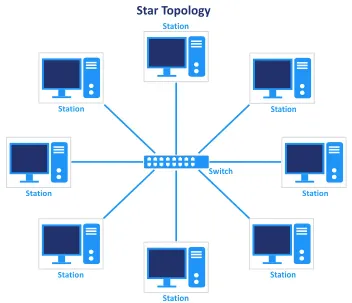 |
| Full Mesh | 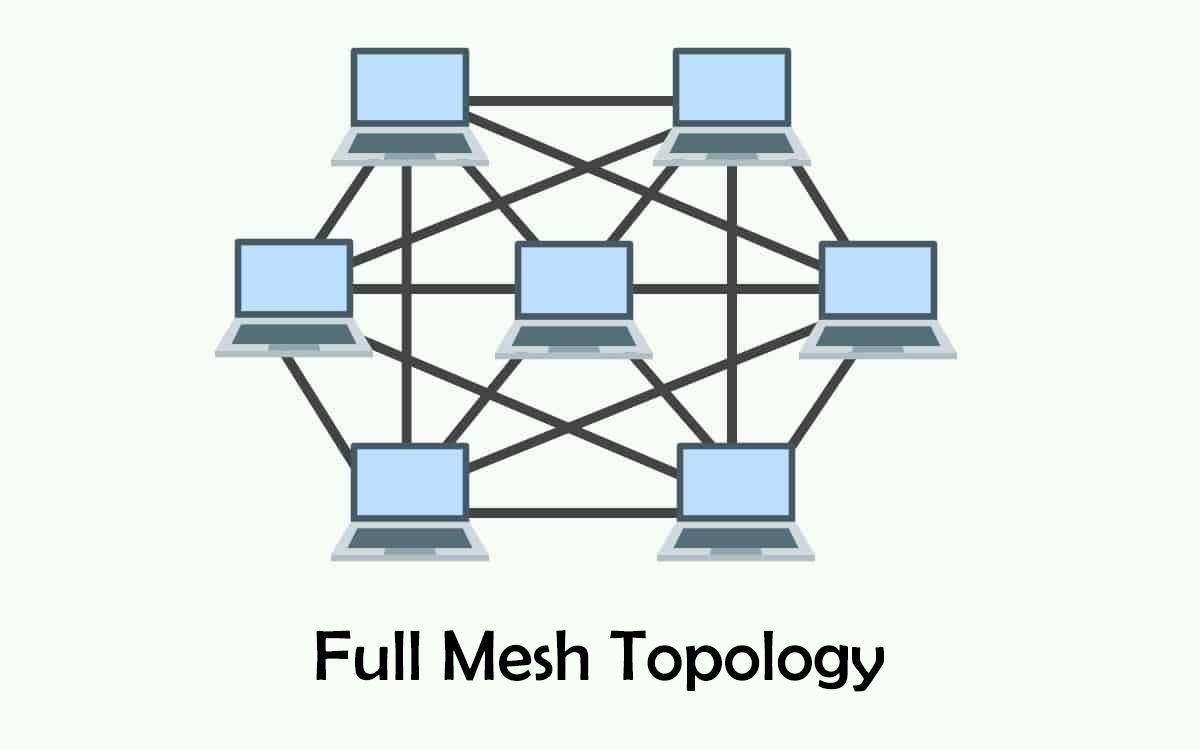 |
| Partial Mesh | 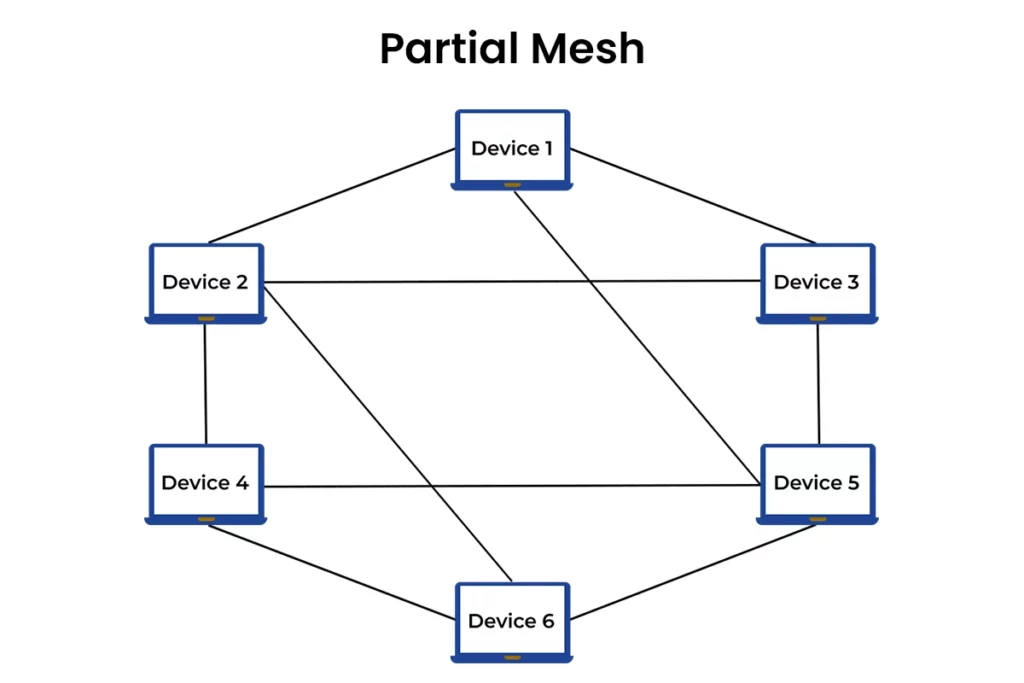 |
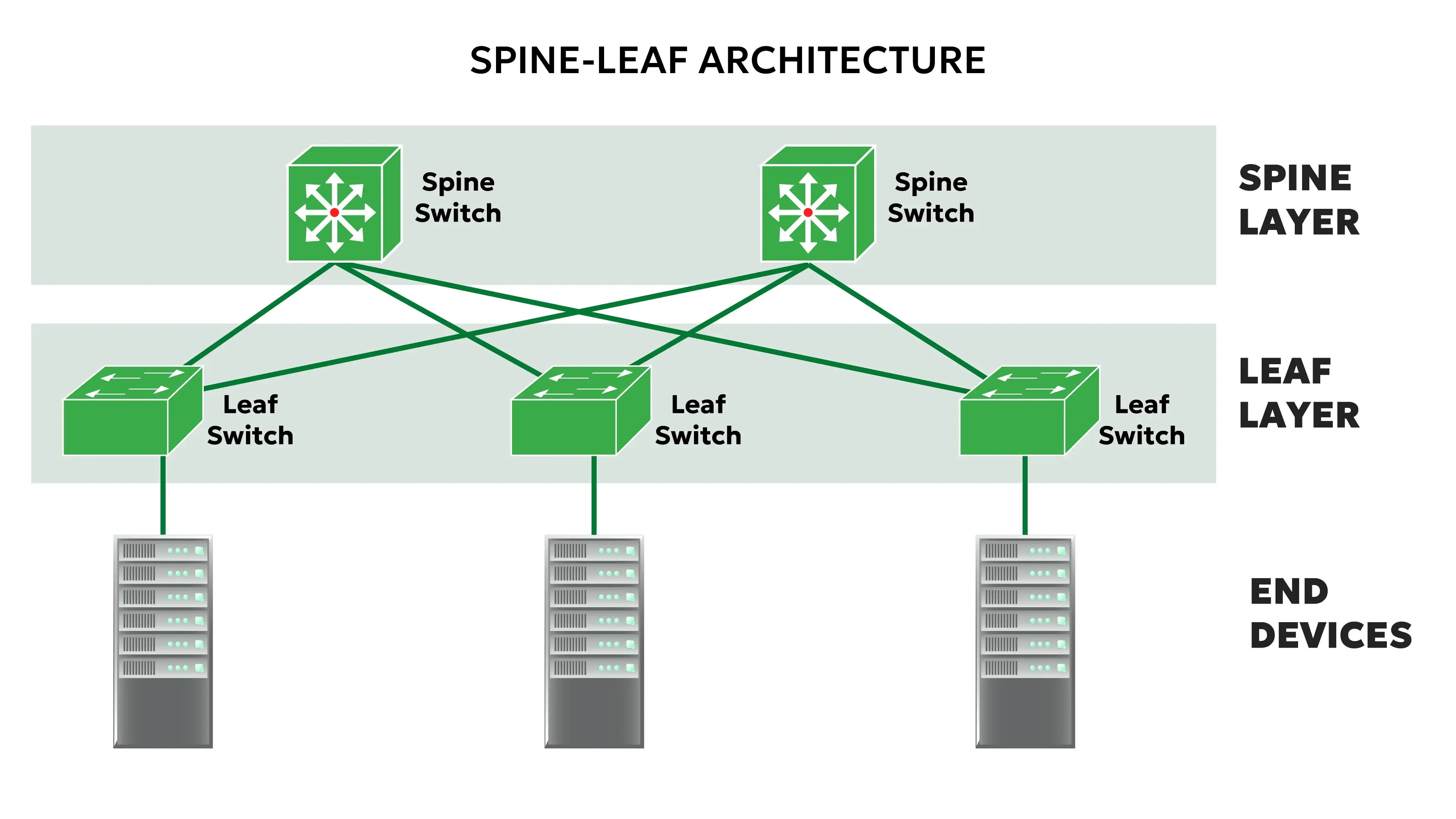
Spine-Leaf (Clos Architecture)
Section titled “Spine-Leaf (Clos Architecture)”Optimized for East-West traffic in data centers.
VXLAN (Virtual Extensible LAN)
Section titled “VXLAN (Virtual Extensible LAN)”Network virtualization technology to overcome VLAN limits in massive data centers.
In simple terms: VXLAN stretches a Layer 2 network over a Layer 3 routed fabric.
Why it’s needed
Section titled “Why it’s needed”In Spine-Leaf, all links are routed (L3) to avoid STP. But what if a VM on Leaf 1 needs the same subnet (L2) as a VM on Leaf 4? Traditional VLANs can’t cross routers.
How it works
Section titled “How it works”- Original L2 Ethernet frame is encapsulated in a UDP packet (port 4789)
- Routed across the Spine-Leaf L3 backbone
- Destination Leaf decapsulates — servers think they’re on the same local switch
Key Concepts
Section titled “Key Concepts”| Term | Definition |
|---|---|
| VTEP (VXLAN Tunnel Endpoint) | Device (usually Leaf switch) that encapsulates/decapsulates VXLAN packets |
| VNI (VXLAN Network Identifier) | 24-bit ID — the VXLAN equivalent of a VLAN ID (16M+ segments vs 4K) |
| Encapsulation | MAC-in-UDP (Outer: IP/UDP/VXLAN; Inner: original L2 frame) |